
Autonomous Mobile Robots (AMRs) are robots that move and perform tasks without human intervention, using real-time data for navigation. Unlike traditional automated robots, AMRs adapt to their environment dynamically, making them valuable in industries like warehousing. In this article, we’ll explore what autonomous mobile robots are, their operations, and their key applications.
Key Takeaways
- Autonomous Mobile Robots (AMRs) operate independently in dynamic environments, using advanced technology for navigation and decision-making, distinguishing them from Automated Guided Vehicles (AGVs), which follow fixed paths.
- Key components of AMRs include sensors, machine learning, and AI, enabling them to autonomously navigate, create real-time maps, and optimise their tasks, thus enhancing their efficiency and effectiveness in various applications.
- The adoption of AMRs offers significant benefits, including increased operational efficiency, improved workplace safety, and flexibility in scaling operations, while also presenting challenges such as technical limitations, regulatory concerns, and initial cost implications.

Understanding Autonomous Mobile Robots
Autonomous Mobile Robots (AMRs) represent the cutting edge of mobile robotics, designed to navigate and perform tasks in dynamic environments without human intervention. These AMR robots are equipped with advanced perception and decision-making capabilities, enabling them to adapt to changing scenarios in real time, utilising various autonomous mobile robot components, autonomous mobile robot technology, mobile manipulators, mobile robot solutions, and autonomous robots on a mobile platform.
AMRs stand out from Automated Guided Vehicles (AGVs) due to their superior flexibility and autonomous navigation. While AGVs follow fixed, predefined paths, AMRs can navigate unmarked environments, making them more versatile and efficient in various applications.
Here we delve into what AMRs are, their key components, and their differences from AGVs.
What Are AMRs?
An Autonomous Mobile Robot (AMR) is a sophisticated machine capable of performing tasks independently, without human control. Unlike traditional robots that require constant oversight, AMRs can autonomously navigate their environment, make decisions, and modify their tasks based on real-time data and environmental changes. This autonomy is made possible through the integration of machine learning and artificial intelligence, which allows AMRs to analyse sensor data and optimise their operations on the fly.
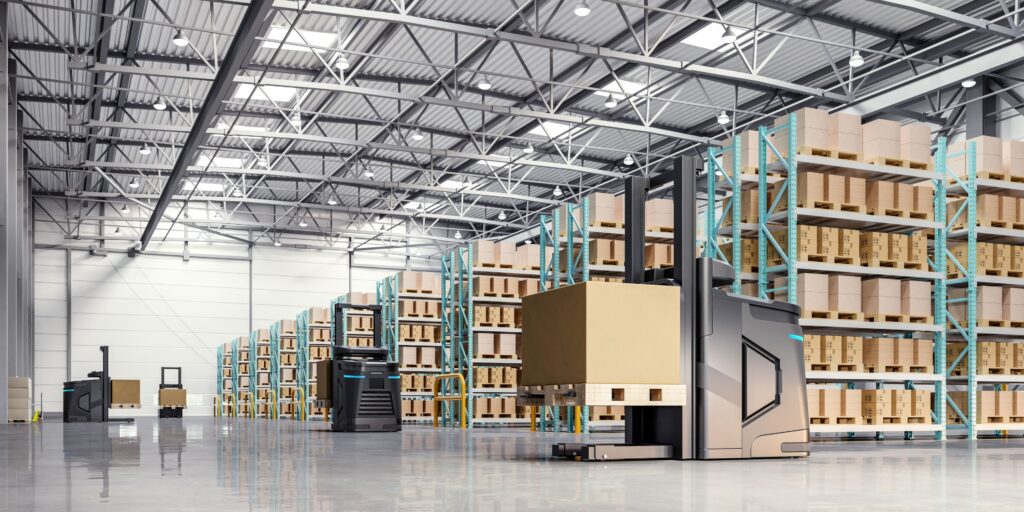
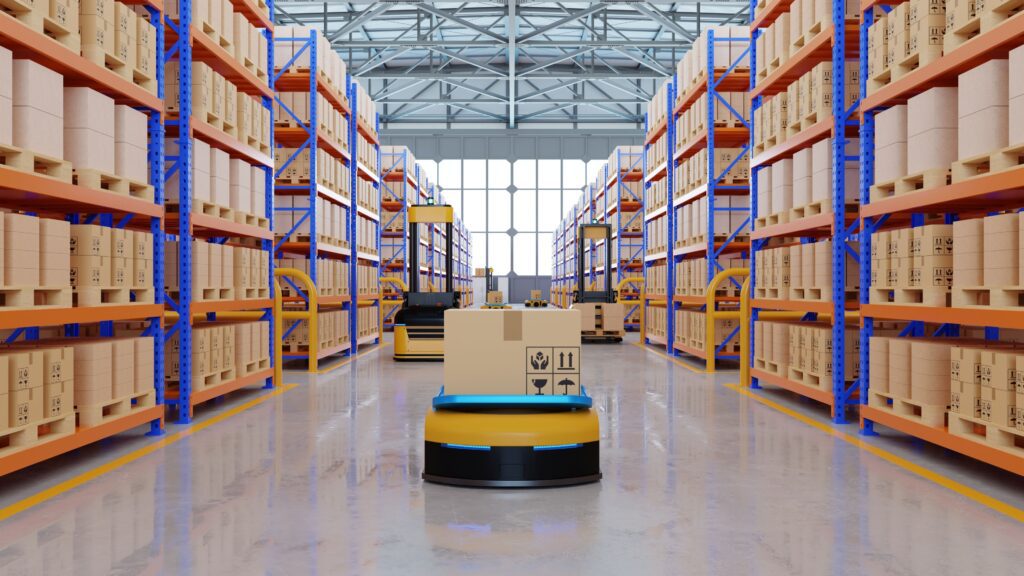
In a warehouse, AMRs transport goods and can autonomously reroute if obstacles appear, maintaining continuous operation and efficiency.
This capability extends to more complex tasks such as last-mile delivery, where AMRs can navigate urban environments to deliver packages directly to customers.
Key Components of AMRs
The core of an AMR’s functionality lies in its components, which include a suite of sensors, processors, and algorithms that work together to enable autonomous operation. Sensors such as LIDAR, cameras, and ultrasonic detectors collect data about the robot’s surroundings, allowing it to build a detailed map of its environment. This map is continuously updated as the AMR moves, helping it navigate complex spaces without colliding with obstacles.
One of the most critical components is the Simultaneous Localisation and Mapping (SLAM) technology, which enables the AMR to create and update a map of its environment while keeping track of its location. This technology, combined with advanced processors and real-time data analysis, allows AMRs to operate with a high degree of autonomy and precision.
How AMRs Differ from AGVs
While both AMRs and AGVs serve the purpose of automating transport tasks, their operational principles are fundamentally different. AMRs navigate freely using a free navigation system enabled by sensors like lasers, whereas AGVs follow fixed paths guided by magnetic tapes or wires. This difference allows AMRs to bypass obstacles and navigate around them, offering greater flexibility.
AGVs, on the other hand, are limited to their predefined routes and cannot adapt to unexpected changes in the environment. This makes AMRs more suitable for dynamic environments where flexibility and adaptability are crucial. The ability to map routes autonomously and react to changing conditions makes AMRs a superior choice for many modern applications.
How Autonomous Mobile Robots Work
Understanding how AMRs work requires a look at the advanced technologies that power them. These robots utilise sensor technology, machine learning, and autonomous navigation systems to operate independently. However, the journey is not without its challenges, such as dealing with collisions that can hinder their widespread adoption and necessitate human intervention.
We will examine the core technologies behind AMRs, such as sensor usage, the role of machine learning and AI, and the autonomous navigation systems enabling their efficient and safe operation.
Sensor Technology
AMRs are equipped with a variety of sensors that enable them to perceive their environment and navigate safely. These include cameras, LIDAR, and ultrasonic sensors, which work together to gather real-time data about the robot’s surroundings. LIDAR technology, for example, helps AMRs create accurate maps of obstacles and their environment using laser beams, while ultrasonic sensors measure distances to avoid collisions in tight spaces.
Advanced obstacle detection systems process this sensor data to help AMRs navigate dynamically changing environments. By continuously analysing this data, AMRs can adjust their movements to avoid obstacles and ensure safe navigation. This combination of sensors and advanced mapping technology is crucial for the autonomous operation of these robots.
Machine Learning and AI
Machine learning and artificial intelligence are at the heart of an AMR’s autonomy. These technologies enable AMRs to analyse data from their environment, learn from experiences, and adapt their behaviours in real time. For instance, machine learning algorithms allow AMRs to constantly update their knowledge of the environment, improving their decision-making processes and navigation efficiency.
AI helps AMRs optimise their path planning by analysing various routes and selecting the most efficient one in real time. This ability is vital for tasks such as obstacle avoidance, requiring quick decisions to maintain smooth operation. AI-driven continuous learning and adaptation render AMRs highly effective in dynamic and complex settings.
Autonomous Navigation Systems
AMRs’ autonomous systems navigation systems use advanced algorithms to safely manoeuvre in complex environments. These systems incorporate data from multiple sensors, which is analysed by control algorithms to make navigational decisions and ensure efficient movement. It involves recognising patterns and dynamically adjusting paths to avoid obstacles.
Computer vision systems further aid navigation by identifying objects and interpreting visual data. AI advancements have significantly enhanced these capabilities, enabling AMRs to autonomously navigate complex environments by detecting and avoiding obstacles in real time. This efficiency shines in dynamic environments where traditional AGVs would struggle.
Applications of Autonomous Mobile Robots
AMRs find applications across diverse industries, including warehousing, manufacturing, healthcare, and hospitality. These robots are equipped with advanced software and hardware, allowing them to perform a range of tasks, including material transport, inspection, and surveillance.
The warehouse AMR market is expected to grow exponentially, underscoring its increasing adoption and importance.
Warehouse and Distribution Centres
In warehouses and distribution centres, AMRs boost efficiency by optimising material movement and reducing search times for workers. They minimise unnecessary walking, allowing employees to focus on more impactful tasks and improving job satisfaction. AMRs are also effective in managing individual packages and items, offering more flexibility than traditional systems.
Picking robots, a type of AMR, improve order fulfilment by using the goods-to-person operation model, eliminating unnecessary travel by workers. Additionally, self-driving forklifts are commonly used for managing storage space, further streamlining warehouse operations.
Manufacturing Facilities
In manufacturing facilities, AMRs play a crucial role in enhancing workflows by transporting materials between production lines, thereby improving overall efficiency. They streamline processes and reduce downtime, contributing to more efficient manufacturing operations.
Automating material handling with AMRs frees human workers to tackle complex tasks, boosting productivity.
Healthcare and Hospitality
In healthcare, AMRs transport supplies, reduce human movement, and minimise infection risks. This application is particularly important in the context of contagious diseases, where limiting human contact can significantly enhance safety and efficiency.
Benefits of Adopting Autonomous Mobile Robots
The benefits of adopting AMRs are manifold, ranging from increased operational efficiency and improved safety to scalability and flexibility. Operating in collaborative spaces with humans, these robots offer greater task execution flexibility than AGVs.
The financial benefits consist of achieving cost savings. They also help minimise errors and reduce labour costs.
Increased Operational Efficiency
AMRs automate repetitive tasks such as assembly and material handling, significantly improving overall efficiency. By handling repetitive tasks, AMRs free human workers to focus on complex, valuable activities. Certain AMRs can operate 24/7 without fatigue, ensuring continuous operation and boosting productivity.
In warehouse operations, integrating AMRs with systems like AutoStore offers greater flexibility and efficiency. They optimise resources within supply chains, streamlining order processing and overall efficiency.
Improved Safety
AMRs enhance workplace safety by taking on physically demanding tasks, reducing the risk of injuries among workers. By automating these tasks, AMRs help decrease fatigue and minimise errors, contributing to a safer work environment.
Managing heavy loads and repetitive tasks, AMRs significantly reduce worker injury risks.
Scalability and Flexibility
One of the standout benefits of AMRs is their scalability and flexibility. These robots can adapt to fluctuating workloads and new configurations without causing significant operational disruptions. This makes them perfect for businesses with seasonal peaks, allowing seamless operational scaling.
AMRs integrate smoothly into existing workflows and adapt quickly to new setups. This adaptability helps businesses stay competitive by efficiently managing resources and maintaining high output with potentially fewer robots.
Their cost-competitive design further boosts their appeal, making them a viable automation solution for various industries.
Challenges and Considerations
While the benefits of AMRs are substantial, some challenges and considerations must be addressed to ensure successful deployment. These challenges include technical limitations, regulatory and safety concerns, and cost implications.
Recognising these challenges is crucial for businesses adopting AMR technology.
Technical Limitations
Technical limitations are a significant challenge for AMRs. Sensor accuracy is critical for AMRs to navigate and identify obstacles in real time. However, distinguishing between real obstacles and non-threatening items can be difficult, leading to unnecessary stops and decreased efficiency. Real-time data analysis from multiple sensors demands substantial processing power, advanced algorithms, and significant investment.
Additionally, unique flooring conditions can pose challenges for AMRs, making it difficult for them to differentiate between obstacles and the floor itself. Creating effective obstacle-detection systems requires significant resources and technological advancements for reliable operation in diverse environments.
Regulatory and Safety Concerns
Deploying AMR requires navigating regulatory hurdles. Establishing safety and interoperability standards is also crucial. The regulatory framework must address these issues to ensure AMR operate effectively and safely.
Robust safety protocols are necessary to mitigate security risks like hacking or misuse.
Cost Implications
The cost of adopting AMRs can be high, with prices ranging from $1,000 to $10,000 or more. Despite the initial investment, long-term benefits in operational efficiencies and capabilities often outweigh the costs. While AMRs are generally more versatile and expensive than AGVs, their advanced technology and adaptability make them a worthwhile investment.
Future Trends in Autonomous Mobile Robots
The future of AMRs is promising, with rapid advancements in AI, machine learning, and integration with other technologies. These trends will further enhance AMRs’ capabilities and applications across various sectors.
Advances in AI and Machine Learning
Improvements in AI and machine learning are critical for the evolution of AMRs. Deep learning algorithms enable robots to perform more intricate tasks and make autonomous decisions. These advancements are expected to enhance the decision-making abilities of AMRs, allowing for more efficient navigation and task execution in dynamic environments.
Continual AI technology development is making AMRs more intelligent and capable of handling complex environments and tasks. This progress is crucial for widespread AMR adoption, enabling more effective and autonomous operation.
Integration with Other Technologies
The integration of AMRs with other technologies such as IoT, 5G, and cloud computing is set to revolutionise automation systems. These integrations boost data sharing and operational coordination, leading to smarter, more interconnected systems. For instance, the combination of AMRs with IoT and 5G improves real-time data transmission, enhancing their operational capabilities and responsiveness.
Safety guidelines and interoperability standards are essential for compliant AMR operations. Successful AMR deployment relies on these standards, ensuring effective operation within existing technological frameworks.
Expansion into New Industries
AMRs have vast potential to expand into new industries, particularly as technology advances. Industries such as retail, agriculture, and logistics are increasingly recognising the need for automation and may adopt AMR technology to enhance efficiency.
Innovations in AI, machine learning, and sensors are making AMRs more adaptable and capable of performing a wider range of tasks, encouraging their adoption across various sectors.
Summary
Autonomous Mobile Robots (AMRs) are transforming industries by offering unparalleled efficiency, flexibility, and operational excellence. From warehouses and manufacturing facilities to healthcare and hospitality, the applications of AMRs are vast and growing. These robots are equipped with advanced technologies that enable them to navigate and perform tasks autonomously, significantly improving operational efficiency and safety.
The future of AMRs is promising, with advancements in AI, machine learning, and integration with other technologies set to further enhance their capabilities. Despite the challenges and considerations, the long-term benefits of adopting AMRs far outweigh the initial costs, making them a valuable investment for businesses looking to stay competitive in an increasingly automated world.
Frequently Asked Questions
What are Autonomous Mobile Robots (AMRs)?
Autonomous Mobile Robots (AMRs) are intelligent machines that navigate and perform tasks in dynamic environments without human intervention. By utilising advanced sensors, machine learning, and AI, they operate independently and adapt to changing conditions.
How do AMRs differ from Automated Guided Vehicles (AGVs)?
AMRs offer greater flexibility and adaptability than AGVs due to their ability to navigate unmarked environments using sensors and advanced algorithms, whereas AGVs rely on fixed, predefined paths. This distinction makes AMR more versatile in dynamic settings.
What are the key components of AMRs?
The key components of Autonomous Mobile Robots (AMRs) are sensors (like LIDAR, cameras, and ultrasonic sensors), processors, and navigation algorithms. These elements collaborate to facilitate autonomous operation and real-time decision-making.
What are the benefits of adopting AMRs in warehouses?
Adopting AMRs in warehouses significantly enhances operational efficiency and improves safety by automating repetitive tasks and reducing worker injury risks. Additionally, their scalability allows for effective adaptation to fluctuating workloads, making them ideal for dynamic environments.
What are the future trends in AMR technology?
The future of AMR technology will be significantly shaped by advancements in AI and machine learning, along with integration with IoT, 5G, and cloud computing. This evolution will enable AMRs to penetrate new industries, such as retail, agriculture, and logistics, enhancing their capabilities and applications.


